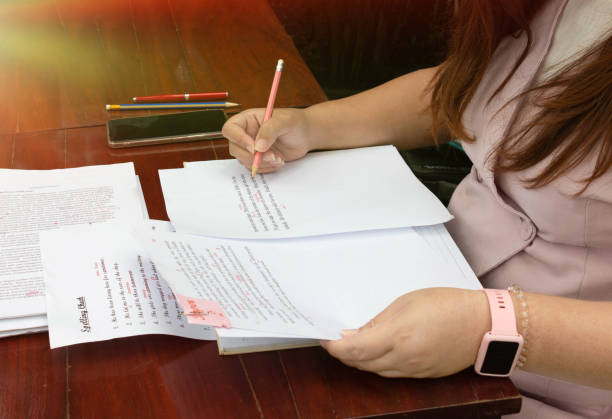
The Ugly Truth About Essays
Okay, let’s be honest. Nobody wakes up excited to write an essay. Like, “Oh wow, today I get to spend four hours arguing about Shakespeare’s metaphors in Macbeth!” Nope. Essays are basically the broccoli of academic life — you don’t want it, but it’s good for you.
And the worst part? You can put in hours and still get slapped with a B-minus because your prof thinks your “argument lacks clarity” (whatever that even means). But here’s the thing: essays aren’t really about being smart, they’re about playing the game. Once you figure out the rules, the top grades start to feel… not easy exactly, but way less like climbing Mount Everest without oxygen.
Step One: Stop Writing Like a Textbook
This one’s huge. I used to write essays that sounded like I swallowed a dictionary. You know the type: “The juxtaposition of the socio-political framework…” blah blah blah. Teachers hate that. Not because they hate big words, but because it screams “I Googled this and copied academic jargon.”
The best essays read like you’re explaining your point to a smart friend over coffee. Think Reddit discussion but with fewer cat memes and slightly better grammar.
For example:
Instead of — “The industrial revolution catalyzed socioeconomic change in nineteenth-century Europe.”
Try — “The industrial revolution basically flipped Europe on its head — new machines, new jobs, and yeah, new problems too.”
See the difference? One makes you sound like a person, the other makes you sound like ChatGPT (ironic, I know).
Thesis Statement = Your Cheat Code
This is the part professors love to hammer into your brain. And honestly? They’re right. Your thesis is like the Google Maps of your essay. Without it, you’re just wandering.
The trick: don’t overcomplicate it. Pick a side, any side, and stick to it. You can even make it sound bold, a little dramatic. Professors eat that up.
Bad thesis: “Climate change is an important issue and people should care about it.”
Good thesis: “If governments don’t stop funding fossil fuels, climate change will bankrupt future economies faster than TikTok ruins attention spans.”
That second one? It pops. It’s an opinion. It makes you want to read the essay. Even if your prof is old-school, they’ll respect that you actually staked a claim.
Research Without Losing Your Soul
Here’s where most students mess up — they drown themselves in research. Like, you don’t need twenty-five sources for a 1,500-word paper. That’s just self-torture.
What works? Find 3–5 solid sources, actually read them (don’t just Ctrl+F keywords), and then twist the info into your own words. Sprinkle in one surprising stat or fact — professors love when you pull out something they haven’t read a hundred times before.
Example: Instead of the generic “social media affects mental health,” drop a weird fact like: In 2023, a survey found that 34% of Gen Z said they check their phones before they even get out of bed — not to message anyone, but just to scroll aimlessly.
That kind of detail makes your essay sound researched but not robotic.
Outlines: Boring but Life-Saving
I used to think outlines were a scam. Like, why waste time planning when I can just wing it? Spoiler: I bombed a lot of essays that way.
An outline is like meal prepping. Yeah, it’s annoying at first, but when you sit down to write, it’s way faster. Just bullet-point your main argument, your three supporting ideas, and a few notes for the conclusion. Done.
Think of it like a TikTok recipe — you don’t need the whole novel of backstory, just the steps to get there.
The Body Paragraph Secret
Here’s a formula (I know, gross word, but trust me). Every body paragraph needs three things:
-
Topic sentence — basically the main idea in one punchy line.
-
Evidence — a quote, stat, or fact.
-
Your voice — explain why that evidence matters.
Most students stop at the evidence, but your prof doesn’t care if you copy-pasted a line from a book. They want your brain. Even if you’re wrong, explaining your take is what earns points.
The Hook Matters More Than You Think
You know how YouTube videos always start with something like “Wait till you see THIS crazy fact about…”? Essays need that too, in a toned-down way.
Don’t start with “Since the dawn of time…” That’s the essay equivalent of elevator music.
Instead, drop them right into the action. Start with a weird quote, a stat, or even a mini-story. Like:
“In 1950, less than 10% of Americans went to college. Today, it’s more than 60%. But grades? Still stressful as hell.”
Boom — now you’ve got attention.
Editing: The Painful but Necessary Part
Okay, confession: I used to write essays at 2 AM, hit submit, and pray. Half the time my arguments contradicted each other, but somehow I survived. If you want top grades, though, you need to edit.
But don’t just reread. Read out loud. You’ll catch awkward sentences instantly. Or use that trick where you change the font and print it out — your brain processes it differently, and suddenly you see mistakes everywhere.
Pro tip: Cut fluff. If your sentence works without the words “in conclusion,” delete them. Your essay should sound lean, not like it ate too many donuts.
The Social Media Trick
This is a little cheat I’ve used: when I don’t know how to phrase something, I look up how people are talking about it online. Twitter (or X, whatever Elon wants to call it this week), Reddit, even Instagram captions — they show you how real people phrase arguments.
Like if you’re writing about AI, you’ll find posts like “AI won’t take your job, but the guy using AI will.” That’s a way snappier sentence than anything in a textbook. Sometimes I’ll sneak those styles into essays, and it actually makes professors comment “nice phrasing.”
Relatable Story Time
So one time, I had this philosophy essay due. The topic? “What is truth?” Yeah, try explaining truth in 2,000 words without sounding like a stoner at 3 AM. I panicked, wrote an essay where half of it was me ranting about Instagram filters and how “truth is subjective because even selfies lie.”
Guess what? My professor LOVED it. Not because I nailed philosophy, but because I wasn’t afraid to be weird and connect it to modern life. Sometimes taking a risk (as long as it still links to the question) pays off way more than playing it safe.
Don’t Ignore the Conclusion
Everyone hates conclusions. By the time you reach the end, your brain is fried, and you just want to slap “so yeah, that’s my essay, thanks for reading” and submit.
But conclusions are your mic-drop moment. Restate your thesis in a sharper way, add one last punchy line, maybe even a prediction. Think of it like the final scene of a Netflix show — you want the audience (or prof) to remember it.
Bad conclusion: “In conclusion, Shakespeare was important and his plays still matter.”
Better: “Four centuries later, Shakespeare still gets standing ovations. Not bad for a guy who didn’t even have WiFi.”
Final Random Tips That Actually Help
-
Drink water. No seriously, dehydration makes your brain write nonsense.
-
Avoid the thesaurus trap. Using “pulchritudinous” instead of “beautiful” won’t impress anyone.
-
Write earlier than you think you should. Procrastination is fun until it’s 3 AM and your essay looks like alphabet soup.
-
Imagine your essay is going viral on Reddit — would people upvote it? That’s the energy you want.
Wrapping It Up (Not Perfectly)
At the end of the day, essays aren’t about being a genius. They’re about packaging ideas in a way that makes sense, sounds confident, and maybe even a little entertaining. If you can argue your point, back it up with a few solid facts, and avoid sounding like a robot, you’re already ahead of half the class.
And remember — grades aren’t everything. But if you can get that A without losing your mind? That’s a win.